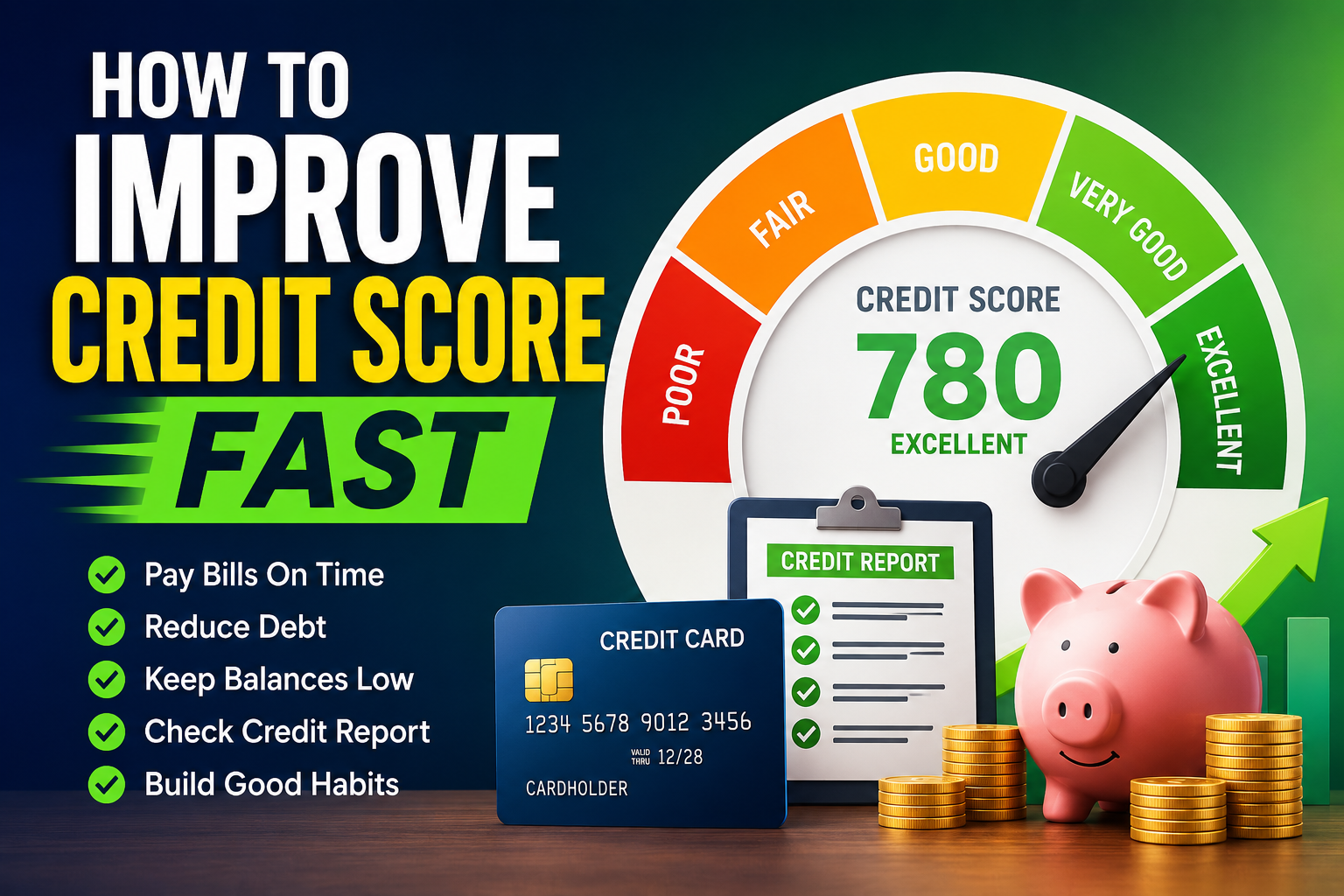
A good credit score can open the door to better financial opportunities. It helps people qualify for loans, credit cards, mortgages, and even lower interest rates. Many banks and lenders use credit scores to decide whether a person is financially trustworthy. Because of this, improving a credit score quickly has become an important goal for millions of people around the world.
If your credit score is low, do not worry. Credit scores can improve over time with the right habits and financial decisions. Some strategies can even increase your score within a few weeks or months. The key is understanding how credit scores work and taking smart steps consistently.
In this detailed guide, you will learn practical and proven ways to improve your credit score fast. Whether you are starting from scratch or recovering from financial mistakes, these tips can help you build a stronger financial future.

What Is a Credit Score?
A credit score is a number that represents a person’s creditworthiness. It usually ranges from 300 to 850. A higher score means lenders see you as less risky, while a lower score may make borrowing more difficult or expensive.
Credit scores are calculated using information from your credit report. Different countries and credit bureaus may use slightly different scoring systems, but the basic idea remains the same.
Credit Score Ranges
- 300–579: Poor
- 580–669: Fair
- 670–739: Good
- 740–799: Very Good
- 800–850: Excellent
People with higher scores often receive better loan approvals, lower interest rates, and higher credit limits.
Why Your Credit Score Matters
A good credit score affects many parts of your financial life. It is not only important for loans and credit cards. Employers, landlords, and insurance companies may also check credit reports in some countries.
Benefits of a Good Credit Score
- Easier loan approvals
- Lower interest rates
- Better credit card rewards
- Higher borrowing limits
- Better chances of renting homes
A poor score can lead to loan rejections and expensive borrowing costs. That is why improving your score should become a financial priority.
Check Your Credit Report First
Before improving your score, you should first review your credit report carefully. Many people discover errors or outdated information hurting their score.
What to Look For
- Incorrect late payments
- Wrong account balances
- Accounts that do not belong to you
- Duplicate debts
- Fraudulent activity
If you find mistakes, report them immediately to the credit bureau. Correcting errors can sometimes increase your score quickly.
You should also monitor your score regularly to track your progress.
Pay Bills on Time Every Month
Payment history is one of the biggest factors affecting credit scores. Missing payments can seriously damage your score.
Tips for Paying on Time
- Set automatic payments
- Use payment reminders
- Pay at least the minimum amount
- Create a monthly budget
- Avoid skipping due dates
Even one missed payment can stay on your credit report for years. Consistent on-time payments show lenders that you are financially responsible.
Reduce Credit Card Balances
Credit utilization refers to how much of your available credit you are using. High balances can lower your score significantly.
For example, if your credit card limit is $1,000 and you use $900, your utilization rate is 90%, which is very high.
Best Credit Utilization Ratio
Experts usually recommend keeping utilization below 30%. Lower is even better.
Ways to Reduce Utilization
- Pay down balances quickly
- Make multiple payments each month
- Avoid unnecessary spending
- Request a higher credit limit
- Use debit cards for daily expenses
Reducing balances can improve scores surprisingly fast.
Avoid Applying for Too Many Credit Cards
Every time you apply for credit, lenders may perform a hard inquiry on your report. Too many inquiries in a short period can lower your score.
Why Too Many Applications Hurt
- Makes lenders think you are desperate for credit
- Increases financial risk
- Temporarily reduces your score
Only apply for new credit when truly necessary.
Keep Old Credit Accounts Open
The length of your credit history also matters. Older accounts help show long-term financial stability.
Many people make the mistake of closing old credit cards after paying them off. However, this can reduce available credit and shorten credit history.
Benefits of Keeping Old Accounts
- Improves account age
- Helps utilization ratio
- Shows long-term responsibility
If an old card has no annual fee, keeping it open may help your score.
Become an Authorized User
One fast method to improve a score is becoming an authorized user on someone else’s credit card account.
If the main account holder has:
- Good payment history
- Low balances
- Long credit history
their positive account activity may help improve your score as well.
This strategy is commonly used by young adults and people rebuilding credit.
Use a Secured Credit Card
People with poor or limited credit history may benefit from secured credit cards.
A secured card requires a refundable security deposit. It works like a normal credit card but helps build positive credit history.
How Secured Cards Help
- Establish payment history
- Build responsible credit habits
- Increase account diversity
Using the card responsibly and paying on time can gradually improve your score.
Diversify Your Credit Mix
Lenders like to see different types of credit accounts managed responsibly.
Examples of Credit Types
- Credit cards
- Personal loans
- Car loans
- Mortgages
- Student loans
A healthy mix can positively impact your score, although it is less important than payment history and utilization.
Negotiate With Creditors
If you have overdue debts, speaking directly with creditors may help.
Some lenders may agree to:
- Payment plans
- Reduced settlements
- Removing negative marks after payment
This is often called a “pay for delete” agreement, although not all lenders offer it.
Honest communication can sometimes prevent further damage to your credit profile.
Avoid Closing Paid-Off Loans Immediately
Closing accounts right after repayment may sometimes lower your score.
While paying off debt is excellent, keeping some accounts active responsibly may maintain a healthier credit profile.
Always think carefully before closing accounts.
Limit Financial Stress and Overspending
Many credit problems come from emotional spending and poor budgeting.
Smart Financial Habits
- Track monthly expenses
- Build an emergency fund
- Avoid impulse purchases
- Save regularly
- Spend below your income
Good money management naturally leads to better credit health over time.
How Long Does It Take to Improve a Credit Score?
The timeline depends on your financial situation and the severity of negative marks.
Estimated Improvement Timeline
- Small improvements: 30–60 days
- Moderate recovery: 3–6 months
- Major rebuilding: 1–2 years
People who consistently follow good credit habits usually see gradual improvement.
Common Mistakes That Hurt Credit Scores
Many people unknowingly damage their credit scores through simple mistakes.
Avoid These Errors
- Missing payments
- Maxing out credit cards
- Applying for too much credit
- Ignoring credit reports
- Closing old accounts
- Defaulting on loans
Avoiding these habits is essential for long-term improvement.
Best Apps and Tools for Monitoring Credit Scores
Modern apps make it easier to track credit progress and financial health.
Popular Credit Monitoring Tools
- Credit Karma
- Experian
- Mint
- NerdWallet
- myFICO
These tools help users monitor changes, detect fraud, and stay financially informed.
Final Thoughts
Improving your credit score fast is possible with discipline, patience, and smart financial habits. While there are no instant miracles, simple actions like paying bills on time, reducing debt, and monitoring your credit report can make a big difference.
The most important thing is consistency. Building strong credit takes time, but every positive step moves you closer to financial freedom and better opportunities.
A healthy credit score can save thousands of dollars over a lifetime through lower interest rates and easier access to financial products. Start today, stay committed, and your credit score can steadily improve faster than you may expect.